
How it works
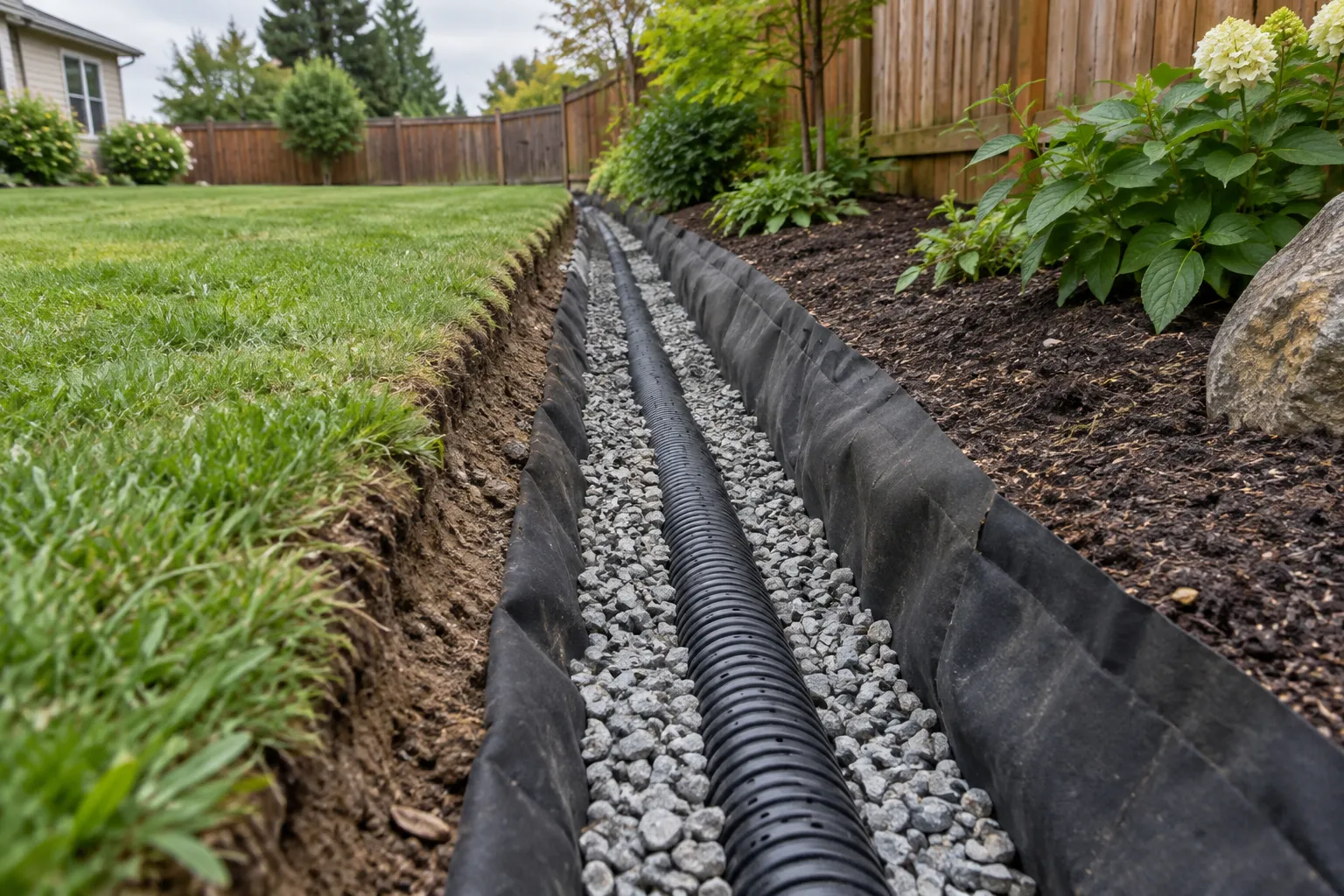
Water always takes the easiest path. A French drain gives it one: a trench lined with fabric, filled with stone, with a perforated pipe along the bottom. Water soaks into the stone, drops into the pipe and runs downhill to an outlet you choose.
Step by step
- Find the problem and the way out. Watch the yard in a heavy rain. Mark where water collects and where it could go: a lower part of the yard, a pop-up emitter or a dry well. The outlet has to be lower than every part of the drain.
- Plan the fall. The pipe needs to run downhill the whole way: at least 1 inch of drop for every 8 feet of pipe (about 1%). More is better. Check the ground with a string line and a line level before you dig.
- Mark and dig the trench. Most yard French drains are 6 to 12 inches wide and 12 to 24 inches deep. Keep the bottom smooth and sloped; low spots hold water and silt.
- Line it with fabric. Lay non-woven filter fabric in the trench, with enough extra on both sides to fold over the top later. The fabric keeps soil out of the stone.
- Add a bed of stone. Put 2 to 3 inches of clean, washed stone in the bottom and rake it to the same slope.
- Lay the pipe. Set the perforated pipe on the stone with the holes facing down, and check the slope every few feet. Connect the low end to your outlet with solid pipe.
- Cover and wrap. Fill around and over the pipe with stone to within a few inches of the surface, then fold the fabric over the top.
- Finish the top. Cover with soil and sod, or leave the stone showing if you want the drain to catch surface water too.
- Test it. Run a hose into the high end. Water should come out at the outlet within a few minutes.
Pro tip: most failed French drains fail at the outlet. If the water has nowhere to go, the best trench in the world just holds it.